
Hotel Furniture China: What Global Buyers Should Check
Buying hotel furniture China can give hotel owners, developers, contractors, designers, and FF&E procurement teams access to broad manufacturing capacity and custom production. The opportunity is real, but the right decision is not simply about finding the lowest quotation. A successful order depends on matching the supplier’s capabilities with your drawings, operating environment, compliance requirements, inspection plan, and delivery schedule.
This guide explains what to check before placing an order with a China-based hotel furniture supplier. Use it to compare factories consistently, reduce avoidable specification gaps, and create a clearer path from design approval to installation.
1. Confirm the supplier’s real hotel furniture capability
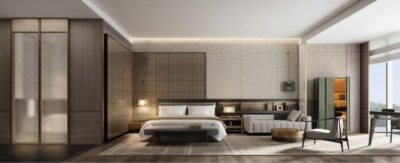
Start by separating a true hotel furniture factory from a general furniture trader. Ask whether the supplier can explain how it handles guestroom casegoods, wardrobes, beds, headboards, sofas, public-area pieces, restaurant furniture, and other items in your package. The important question is not how many product photos appear online; it is whether the team can turn your design intent into repeatable, project-ready production.
A capable supplier should be able to discuss drawings, dimensions, materials, finishes, hardware, upholstery, packing, installation interfaces, and approval samples. It should also identify which items are made in its own facilities and which are sourced from partners. This distinction matters when a project contains many room types or requires consistent finishes across bedroom, suite, lobby, and dining areas.
MEITIAN states that FOSHAN MEITIAN Hotel Furniture Factory designs, manufactures, and installs high-star hotel furniture, including hotel bedroom furniture, public-area furniture, sofas, chairs, coffee tables, and restaurant furniture. The same page describes OEM and private-label manufacturing for global brands, hotels, and project developers. These are claims to verify against the current project scope, not a reason to skip technical due diligence.
2. Match the quotation to a complete specification
A hotel furniture quotation is only useful when every supplier is pricing the same scope. Send a coordinated package that identifies item codes, quantities, dimensions, materials, finish references, hardware requirements, upholstery specifications, electrical cut-outs, installation conditions, and packing expectations. Include room-type schedules and public-area quantities rather than asking for a broad price per room with no supporting breakdown.
Request the quotation in a format that lets your team compare like for like. At minimum, ask for unit prices, tooling or sample charges, packaging, delivery terms, estimated production timing, and any exclusions. Confirm whether installation, spare parts, replacement pieces, and site adjustments are included or quoted separately. If a supplier proposes a substitution, require it to be listed clearly rather than hidden inside a general description.
For hotel projects involving custom hotel furniture, approve a controlled finish and material schedule. Record the exact veneer or board type, stain or laminate reference, edge treatment, metal finish, fabric code, foam requirement, and hardware model. A cheaper offer can become more expensive if it later causes redesign, re-sampling, rework, or site fitting problems.
3. Check samples, quality control, and compliance documents
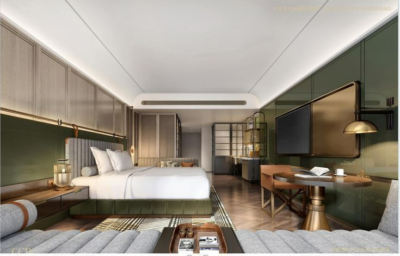
Before bulk production, define how approval will work. A useful sequence is: drawing review, material and finish samples, prototype or representative sample, production inspection, pre-shipment inspection, and receiving inspection at the project site. Decide who signs each approval and which document controls later production. Photos are helpful, but they do not replace physical checks when color, texture, dimensions, or hardware operation are important.
Your checklist should cover construction quality, surface consistency, doors and drawers, alignment, edge protection, upholstery stitching, glass or stone interfaces, and packaging labels. For built-in or electrical-integrated furniture, coordinate the furniture drawings with the architect, MEP team, and contractor before cutting begins. Confirm tolerances and site dimensions rather than relying only on a concept rendering.
Compliance is market-specific. If composite wood products will be imported into the United States, review the U.S. Environmental Protection Agency’s formaldehyde standards. The EPA explains that regulated products include hardwood plywood, medium-density fiberboard, particleboard, and finished goods containing these products, with requirements covering labeling, testing, recordkeeping, and import certification. Other destinations may have different rules for fire performance, emissions, timber, chemicals, or electrical components. Ask the supplier for documentation that matches the destination and the actual materials used; never treat an unrelated certificate as universal compliance.
For sustainability claims, define the evidence required. The Forest Stewardship Council furniture guidance explains that certification and chain-of-custody systems support responsible sourcing claims. If your project requires FSC-labelled or traceable materials, confirm the relevant certificate scope, product claim, and chain of custody before placing the order.
4. Plan logistics and installation before production starts
Furniture that looks correct in a factory can still fail at the jobsite if delivery and installation are not planned. Confirm the shipping terms, port responsibilities, carton markings, container loading logic, moisture protection, fragile-item protection, and document requirements. Provide the supplier with the delivery sequence if rooms must be released in phases. Ask how cartons will identify building, floor, room type, item code, and installation position.
Coordinate unloading access, elevators, corridors, storage areas, site protection, and contractor responsibilities. For large wardrobes, headboards, vanities, and public-area furniture, verify whether pieces arrive assembled, partially assembled, or flat-packed. Make sure the proposed packing method is compatible with the site’s handling equipment and labor conditions.
MEITIAN Hotel Furniture Catalog provides access to hotel bedroom furniture information, a company profile, and a projects document. Use these resources to build an initial product discussion, then request project-specific drawings and commercial documents for the actual order. The catalog is a starting point, not a substitute for a signed specification and approval sample.
5. Evaluate communication and after-sales support
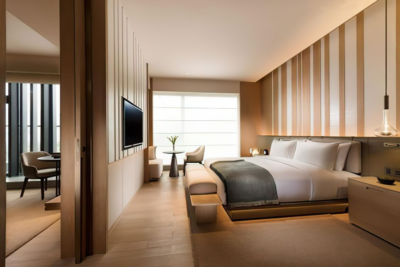
International procurement requires more than manufacturing. Assess how the supplier records questions, controls revisions, reports progress, handles nonconformities, and responds when a replacement or adjustment is needed. Assign one decision-maker on your side and keep a revision register so outdated drawings do not return to production.
Ask practical questions: Who approves shop drawings? Who owns the finish sample? How are shortages reported? What is the process for damaged cartons? Are spare parts available? How are warranty cases documented? What information must be supplied for a replacement? Clear answers reveal whether the supplier is prepared for project coordination rather than only order taking.
MEITIAN Hotel Furniture Manufacturer lists project contact information and describes custom hotel furniture manufacturing for global brands, hotels, and project developers. When requesting a quotation, send the property type, target market, room count, furniture schedule, drawings, finish references, delivery location, required date, and compliance requirements. This gives the factory enough context to respond accurately.
Request a project-specific hotel furniture proposal
If you are comparing china hotel furniture suppliers, send MEITIAN your room schedule, drawings, finish references, quantities, delivery location, and target installation date. MEITIAN hotel furniture factory team can review the brief and advise on a suitable custom manufacturing scope. A detailed inquiry makes it easier to discuss samples, specifications, quality checks, packing, and delivery before you commit to bulk production.
Send your information to sales@fsmeitian.com, request the catalog, and speak with a hotel furniture factory in China about your next international hospitality project.