
Hotel Furniture for Middle East Projects: A Buyer’s Guide
Hotel furniture for Middle East projects must connect a strong design concept with practical project control. Owners, developers, contractors, interior designers, and FF&E procurement teams need to coordinate room types, public areas, materials, site conditions, documentation, and delivery before a factory begins bulk production. The right approach is not to assume that one regional style or one generic furniture package fits every property. It is to define the hotel’s operating needs, confirm the project information, and require written decisions at each approval stage.
This guide explains how to prepare a Middle East hotel furniture package for an international supplier. It focuses on climate-aware thinking, guestroom and public-area coordination, clear specifications, quality control, packing, and inquiry preparation. Local regulations, project contracts, consultant requirements, and destination conditions remain the controlling references for each individual development.
Start with the property brief and regional operating context
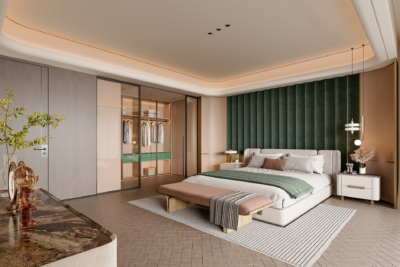 A hotel furniture package should begin with the property brief, not a product catalogue. Record the hotel type, room count, room mix, public-area zones, opening programme, design direction, delivery destination, and procurement responsibilities. A city hotel, resort, serviced apartment, and branded business property can have very different furniture priorities even when they use similar room categories.
For a Middle East project, the team should also describe the operating context that affects furniture decisions. Consider whether furniture will be used in air-conditioned guestrooms, shaded terraces, entrance areas, restaurants, corridors, or other spaces with different exposure and cleaning routines. Identify dust-control expectations, housekeeping methods, luggage movement, high-contact surfaces, and the maintenance access needed by the operator. These are project questions, not assumptions that can be answered only by the country name.
Create a room and area schedule
Use one item-coded schedule for guestrooms, suites, lobby areas, restaurants, meeting spaces, corridors, and back-of-house areas. Each row should show the item code, description, location, quantity, dimensions, materials, finish, upholstery, drawing reference, revision, and approval status. Link repeated items to room types so the procurement team can see the total requirement and the contractor can plan installation.
This schedule gives a hotel furniture factory a defined basis for quotation. It also prevents a common problem: a supplier receives attractive renderings but has to guess quantities, clearances, hardware, or the boundary between furniture and site work.
Specify materials for climate, cleaning, and daily use
Material selection should reflect the actual location and operating routine. For interior hotel furniture, define the substrate, veneer or laminate reference, colour, sheen, edge treatment, grain direction, hardware, and protective finish where these affect appearance or maintenance. For upholstered pieces, identify the approved textile or leather reference, colour, pattern direction, cushion construction, and any performance requirements already stated by the design or operating team.
Public-area pieces need particular attention because guests, luggage, housekeeping equipment, and frequent movement create different demands from a private residence. Specify the intended use for sofas, lounge chairs, tables, consoles, restaurant seating, and reception-adjacent furniture. Confirm how surfaces are expected to be cleaned and which areas require easy access for inspection or replacement.
Do not treat words such as “luxury,” “wood finish,” “brass,” or “stone look” as complete technical requirements. They communicate direction, but the supplier still needs a sample, reference, or written material description. Where the design is not final, mark the decision as open and ask the factory to list its assumption separately instead of presenting an unapproved substitute as a confirmed specification.
Consider outdoor and transition areas separately
Entrance canopies, terraces, pool-adjacent areas, and other semi-outdoor locations should not automatically use the same furniture specification as guestrooms. Identify exposure, shade, moisture, dust, cleaning, storage, and protection requirements for each area. If the project includes outdoor or transition furniture, ask the design and operations teams to define the required material and maintenance standard before quotation. Do not claim that a generic indoor item is suitable for exterior use without project-specific confirmation.
Coordinate design details with construction documents
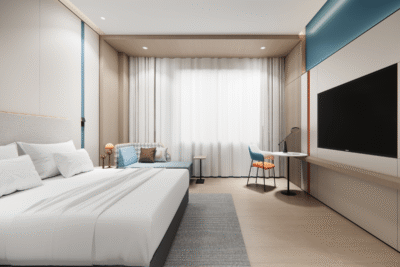 A successful hotel furniture China sourcing process depends on clear coordination between the interior design package and the factory’s technical documents. Send the latest plans, elevations, room data sheets, reflected information where relevant, furniture schedule, finish board, and reference images. Mark which documents are conceptual and which are approved for quotation or production.
Check critical interfaces before releasing an item. These may include wall dimensions, skirting, doors, curtain positions, lighting, sockets, data points, plumbing clearances, television locations, minibar ventilation, bathroom thresholds, and accessible routes. A bedside table can be attractive and correctly manufactured yet still block a socket. A wardrobe can match its nominal dimensions but fail to pass through the lift or corridor route.
Control revisions and approvals
Set an approval sequence for quotation, shop drawings, finish samples, mock-up or prototype items where required, pre-production confirmation, inspection, packing, and site receipt. Every approval should identify the item code, revision, approver, date, and comments. Keep superseded drawings out of the active production package.
For a hotel furniture factory, this traceability makes it easier to distinguish a confirmed instruction from a design reference. For the buyer, it creates a record of what was quoted, approved, manufactured, packed, and received. If a substitution or dimensional change is proposed, compare it against the approved appearance, function, maintenance, and commercial requirements before accepting it in writing.
Evaluate a supplier without overpromising project results
When selecting a supplier for hotel furniture Middle East projects, evaluate the supplier against the actual package rather than relying on a general catalogue. Ask how the team will handle technical clarification, samples, shop drawings, production communication, inspection records, packing labels, shipping coordination, and unresolved site issues. Separate published company information from project-specific commitments that still require written confirmation.
MEITIAN Hotel Furniture Factory as involved in designing, manufacturing, and installing high-star hotel furniture, and lists bedroom, public-area, sofa, chair, coffee-table, and restaurant furniture within its stated scope. This is a published company description, not a guarantee that every item, service, destination, or date applies to a particular project.
MEITIAN Hotel Furniture Catalog can support an initial product and project discussion. The hotel bedroom furniture and hotel public area furniture can help organise a preliminary reference list. A catalog or category page should not replace approved drawings, finish samples, a project quotation, inspection criteria, or written confirmation of scope.
Plan inspection, packing, and delivery before production
Quality control should follow the project’s approved documents. Define what will be checked at sample stage, during production, before packing, on receipt, and after installation. Depending on the item and contract, checks may cover dimensions, finish consistency, upholstery, hardware operation, alignment, surface condition, quantity, item identity, and packaging protection. Do not state that an item meets a requirement until it has been checked against the applicable record.
Packing should help the receiving and installation teams identify every piece. Use item codes, room or zone references, quantities, handling notes, and package records. Confirm that the destination can receive package sizes through doors, lifts, corridors, and storage areas. For a renovation or an operating hotel, coordinate delivery windows and protected routes around guest movement and other trades.
Before dispatch, confirm the latest approved production list, destination, delivery responsibilities, required documents, and the process for reporting damage or missing components. These details make an international furniture package easier to control without promising an unverified lead time or delivery outcome.
Prepare a complete inquiry for a Middle East hotel project
A focused inquiry allows the supplier to respond to the project instead of guessing. Include:
- Property type, destination, project stage, and room or area schedule.
- Plans, elevations, room data sheets, furniture codes, and current drawing revisions.
- Materials, finishes, upholstery references, quantities, and approved samples if available.
- Guestroom, suite, public-area, restaurant, and any semi-outdoor scope separated by zone.
- Delivery destination, access constraints, target dates, and installation responsibilities.
- Required quotation format, commercial assumptions, packing expectations, inspection stages, and unresolved decisions.
MEITIAN hotel furniture china to start a project-specific discussion. Ask the team to confirm which details are sufficient for quotation, which items need technical clarification, what samples or shop drawings are proposed, which exclusions or substitutions apply, and what information is needed before production release. Keep the response with the project records and map it back to the item-coded schedule.
Request a coordinated hotel furniture proposal
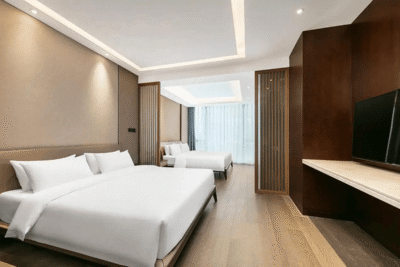 Hotel furniture for Middle East projects is easier to manage when regional operating questions are translated into item-level requirements. Build the schedule first, define materials and interfaces, control revisions, review supplier capabilities against the real scope, and plan inspection, packing, delivery, and installation before bulk production. If you are developing a hotel, resort, serviced apartment, or public-area package, send us your drawings, schedule, finish references, quantities, destination, and target dates. Request a project-specific response that clearly states scope, assumptions, exclusions, samples, approvals, and next technical steps.
Before sending the inquiry, identify the decisions that could change the quotation or programme. List open questions about dimensions, finishes, upholstery, installation boundaries, package labelling, inspection records, destination access, and any semi-outdoor use. Ask the supplier to separate confirmed information from recommendations and to return comments against the same item codes used in your schedule. This gives the owner, designer, contractor, and FF&E team a record they can review together, rather than relying on disconnected messages. It also keeps the inquiry within a responsible evidence boundary: published website information can start the conversation, but project-specific price, capacity, delivery, compliance, and installation outcomes must be confirmed in writing.