
Hotel Furniture Budget Planning: How Owners Can Compare Total Project Value
A reliable hotel furniture budget is more than a list of unit prices. Owners, developers, contractors, designers, and FF&E procurement teams should compare the complete project value: design fit, material and construction choices, quantities, packing, shipping, installation coordination, inspection, maintenance, and the cost of correcting avoidable errors. The lowest quotation can become expensive when specifications are incomplete, interfaces are missed, or furniture needs replacement sooner than planned. A useful budget therefore makes assumptions visible and compares equivalent scopes before an order is released.
For an international project, start with a controlled furniture register and a clear room or area schedule. Then ask each hotel furniture supplier to price the same information, separate included and excluded work, and identify items that still require confirmation. This approach helps the project team discuss hotel furniture, hotel furniture factory capability, and hotel furniture China sourcing on comparable terms without assuming unverified products, certifications, customers, capacity, or delivery promises.
Build the budget from a complete furniture scope
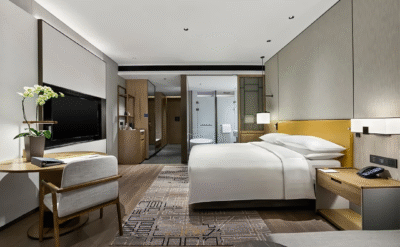 The first budgeting error is pricing before the scope is stable. Create a list by room type and public area, including quantities, dimensions, finishes, hardware, upholstery, loose items, built-in elements, and any coordination with lighting, power, plumbing, doors, walls, or flooring. Distinguish one-time samples and mock-ups from the bulk order. Mark which quantities are confirmed and which are allowances.
A guestroom schedule may include the bed or bed platform, headboard, bedside tables, desk or vanity, chair, luggage bench, wardrobe, minibar or storage unit, mirror, coffee table, and other approved pieces. Suites and public areas can add sofas, lounge chairs, dining tables, restaurant seating, reception furniture, corridor items, or custom joinery. The exact list must come from the project drawings, operator requirements, and approved furniture schedule rather than from a generic package.
Separate cost categories before comparing suppliers
Use separate lines for furniture fabrication, finishes and hardware, samples or mock-up work, packing, documentation, freight, destination charges, site delivery, installation, protection, inspection, spare parts, and contingency. Some projects will not assign every line to the furniture supplier. That is acceptable, but the responsible party and budget assumption should be recorded.
A clear cost structure prevents a quotation with a narrow factory scope from being compared with a quotation that includes additional services. It also makes later value engineering more disciplined: the team can change a material, dimension, or quantity while seeing which downstream costs may move with it.
Compare total project value instead of unit price
Unit price is useful only when the compared items have equivalent specifications. A lower number may reflect a different substrate, thinner component, simpler hardware, fewer finish steps, different packaging, or a reduced service scope. Ask for a line-by-line quotation tied to item codes and drawing revisions. Review the assumptions behind quantities, dimensions, finish samples, hardware, tolerances, and installation interfaces.
Total project value also includes the probability and consequence of rework. An unclear wardrobe opening, an uncoordinated headboard wall, or a missing service access point can create site labor and delay even when the furniture line looked inexpensive. A supplier that identifies these questions early may provide better value than one that simply returns a lower total with unresolved exclusions.
Use a like-for-like quotation matrix
Create columns for item code, description, room or area, quantity, dimensions, materials, finish, hardware, sample status, unit price, extended price, packing, delivery term, installation scope, lead-time assumption, exclusions, and clarification status. Require the supplier to reference the same revision of the furniture schedule and drawings. If an alternative is proposed, place it on a separate line instead of silently replacing the specified item.
The matrix should be reviewed by procurement, design, construction, and finance together. Procurement can check commercial completeness; the designer can check visual and material equivalence; the contractor can review interfaces and installation; finance can test the total against the approved project allowance. This shared review is more dependable than choosing a supplier from a single summary number.
Budget for quality control and approval gates
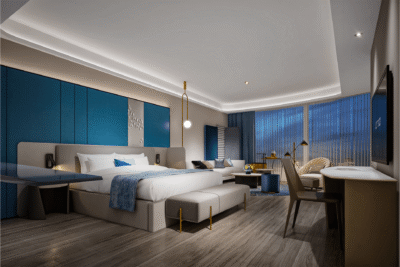 Samples, finish boards, shop drawings, and a representative mock-up can appear as additional costs, but they also provide decision points before repeated production. The appropriate approval plan depends on the project. For a complex guestroom or high-repetition package, review the details that carry the greatest design, coordination, or rework risk. Record the approved revision and keep comments in one controlled register.
Before bulk production, confirm dimensions, finishes, hardware, quantities, packing labels, inspection points, and the method for handling nonconforming items. A hotel furniture factory should receive the current approved information, and the project team should know what remains open. Do not treat a catalog image or an early sample as automatic approval for a project-specific item.
Keep contingency tied to identifiable risks
Contingency is most useful when it is connected to known uncertainty: incomplete quantities, pending finish approval, site measurement, shipping variables, damage allowance, or design changes. Avoid using one unexplained percentage to hide every gap. List the risk, owner, trigger, and provisional amount. Remove or reallocate the allowance when the risk is closed.
This also improves conversations with a hotel furniture China supplier. The buyer can ask for confirmation of scope and assumptions rather than demanding an arbitrary discount. If the specification changes, the team can see whether the effect is on fabrication, packing, transport, installation, or future maintenance.
Include lifecycle and operational considerations
A hotel furniture budget should reflect how the property will use and maintain the furniture. High-contact surfaces, moving hardware, upholstery, storage, bed surrounds, and public-area seating may face different cleaning, replacement, and traffic requirements. Ask the operator and housekeeping team to identify access, cleaning, repair, spare-part, and turnover needs before final selection.
Lifecycle value does not mean choosing the most expensive material. It means selecting a documented solution that fits the room concept, expected use, maintenance plan, and available replacement process. A finish that looks right in a sample but is difficult to repair or replace may create operational friction. Conversely, a practical standardized detail may reduce future disruption when several rooms share the same component.
Connect the budget to project decisions
When the team proposes value engineering, describe the change precisely: which item, which material or dimension, what visual or performance effect, what quantity, and what downstream coordination changes. Keep the approved baseline visible. Do not approve a saving that shifts cost to site labor, installation risk, maintenance, or guest experience without recording that trade-off.
Review the supplier proposal and inquiry package
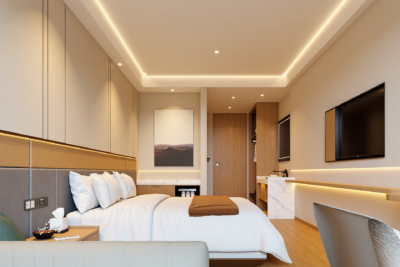 Send the supplier a concise package: project type, room and area schedule, drawings, furniture register, specifications, finish references, destination, target installation date, approval milestones, and known site constraints. Ask for a quotation that identifies what is included, what is excluded, which details need clarification, and which assumptions affect price or schedule.
FOSHAN MEITIAN Hotel Furniture Factory designs, manufactures, and installs high-star hotel furniture, including bedroom, public-area, sofa, chair, coffee-table, and restaurant furniture. This is an official company description, not a project-specific quotation or guarantee. For product references, MEITIAN Hotel Furniture Catalog is a starting point for reviewing publicly presented hotel furniture categories. Confirm the final item scope, specifications, price, responsibilities, and schedule directly for the project.
For a budget review, MEITIAN china hotel furniture factory share the project schedule and request a discussion. Include the property type, room count or area schedule, furniture register, drawings, destination, finish direction, target dates, and the cost categories you want separated. Ask for written clarification of samples, shop drawings, inspection, packing, delivery, installation, spare parts, and exclusions before comparing the proposal with alternatives.
MEITIAN hotel furniture suppliers provide the project information needed for a factual review. Request clarification of the scope, specifications, commercial assumptions, and responsibilities; do not rely on generic budget figures without project documents.